
The Ultimate Guide to Planning Your Alaska Adventure

Cruises, glaciers, ports, Denali, rail journeys and everything we’ve learned from experiencing Alaska ourselves
There are some vacations you can plan by choosing a destination, finding a hotel and buying a plane ticket.
Alaska isn't one of them.
That's one of the biggest things we've learned from experiencing Alaska ourselves.
Two travelers can both say, “We took an Alaska cruise,” and come home having experienced two remarkably different vacations.
One may have sailed roundtrip from Seattle and spent a week exploring Southeast Alaska. Another may have started in Vancouver, cruised north through the Inside Passage, disembarked in Whittier and continued deep into Alaska's interior by rail. One may have spent an entire day surrounded by the protected wilderness of Glacier Bay National Park. Another may have stood on deck watching the massive face of Hubbard Glacier. One itinerary might include Juneau, Skagway and Ketchikan, while another adds Icy Strait Point or Sitka.
I know this first hand as I recently led two tours in Alaska two months apart. People questioned why I would take the same vacation twice so soon. I told them Alaska is a big place but I didn't fully understand just how different each trip would be until I experienced them both firsthand.
The cruise line matters. The ship matters. The itinerary matters. The ports matter. And what you choose to do before and after the cruise can completely transform the experience.
Alaska has become the most requested and booked destination at JMart Travels—by a lot. I've had the opportunity to experience Alaska by ship, by rail and on land. I've explored its ports, watched glaciers, searched for wildlife, traveled into Denali National Park and experienced firsthand just how unpredictable Alaska weather can be.
Every visit taught me something new.
So rather than simply tell you that Alaska is beautiful—and trust me, it is—I created this guide to help answer a much more important question:
What kind of Alaska vacation is right for you?
First Things First: There Is No Single “Alaska Cruise”
The majority of Alaska cruises travel through the Inside Passage, a roughly 500-mile coastal region filled with islands, fjords, mountains, temperate rainforest and glaciers. But the itineraries themselves can vary considerably.
You'll generally encounter three broad options.
Roundtrip from Seattle
For many American travelers, this can be the simplest option. Fly into Seattle, board the ship, spend approximately a week cruising Alaska and return to Seattle. That convenience has real value—especially for families or travelers who don't want to add additional logistics before or after their cruise.
Roundtrip from Vancouver
Vancouver is another major gateway to Alaska and can provide different itinerary options. It also means beginning and ending your vacation in Canada, so international travel requirements and flights need to be considered.
One-Way Between Vancouver and Alaska
These itineraries are particularly interesting for travelers who want to experience more than coastal Alaska. Many one-way cruises connect Vancouver with Seward or Whittier, Alaska. From there, travelers can continue by rail or motorcoach to Anchorage, Denali and even Fairbanks.
JMart Firsthand Take: If seeing Denali and interior Alaska is important to you, decide that before choosing your cruise. Your desire for a land experience may determine which cruise itinerary makes the most sense. Let me tell you something else I've learned: take the tour before the cruise. Land tours are exhausting. Living out of a suitcase for several days. Boarding busses, planes, trains, automobiles. All day every day go go go. By the time I got to the cruise ship I was ready for some pampering!

Do I Need a Passport for an Alaska Cruise?
This is one of the most misunderstood Alaska cruise questions. For U.S. citizens, the answer depends on the itinerary.
U.S. citizens on qualifying closed-loop cruises—cruises that begin and end at the same U.S. port—can generally travel with certain other approved citizenship and identification documents instead of a passport. A cruise that begins in one country or port and ends somewhere else is different. Canada is an important consideration on Alaska itineraries.
Our recommendation at JMart Travels is simple: travel with a valid passport.
Even when your particular cruise may allow another form of documentation, a passport provides far greater flexibility should an unexpected situation require international air travel. Documentation requirements also vary based on citizenship and itinerary, so this is something we review with our travelers rather than assuming every Alaska cruise has identical requirements.
Glacier Bay or Hubbard Glacier?
This may be one of the most important differences travelers overlook when comparing Alaska itineraries. A website might list both as “glacier viewing.”
They are not the same experience.
And we don't think one is universally better than the other.

Glacier Bay National Park & Preserve
Glacier Bay isn't simply a stop to see one glacier. It's an extended scenic journey through one of America's national parks. Cruise ships travel deep into the bay, surrounded by mountains, wildlife and multiple glaciers. The National Park Service says ships typically spend four or more hours in Glacier Bay's glacier areas. Access is controlled to protect the park, with no more than two cruise ships per day permitted. Currently authorized cruise lines include Princess, Holland America, Norwegian, Seabourn, Cunard and Viking.
That limited access is one reason we pay close attention when an itinerary includes Glacier Bay.
Think of Glacier Bay as:A journey through an entire protected glacial landscape.

Hubbard Glacier
Hubbard is something different. It's about scale. Hubbard Glacier flows more than 75 miles and is North America's largest tidewater glacier. Its terminal face stretches for miles, with hundreds of feet of ice extending from below the waterline to high above it. Unlike many glaciers that have retreated, Hubbard has historically been advancing.
Seeing it from the water can be extraordinary.
And because Hubbard is an active tidewater glacier, you may even witness calving—when pieces of ice break from the glacier and crash into the water. Nature, of course, provides no performance schedule.
Think of Hubbard Glacier as:An encounter with one absolutely enormous glacier.

So Which Should You Choose?
Here's the frustrating travel-agent answer: It depends.
If experiencing a U.S. national park and spending hours traveling through a protected glacial landscape appeals to you, Glacier Bay deserves serious consideration.
If standing before one of North America's great tidewater glaciers sounds like your idea of an unforgettable Alaska moment, Hubbard may be exactly what you're looking for.
And some itineraries and longer trips can expose travelers to multiple glacier experiences.
JMart Traveler Tip: Don't simply look for the word glacier on an itinerary. Ask which glacier experience you're actually getting. And find out if expeditions or excursions are available to give you an even more up close and personal experience.

Meet the Ports: They're Not Interchangeable Either
Here's another mistake we see when travelers compare Alaska cruises:
Seven nights + Alaska + balcony cabin ≠ seven nights + Alaska + balcony cabin.
Look at the ports. And look at how long you're actually in them. Each has a completely different personality.

Juneau: Glaciers, Whales and Adventure
Alaska's capital is one of the most versatile ports on an Alaska itinerary. Juneau offers access to Mendenhall Glacier, whale watching, hiking, food experiences and plenty of outdoor adventure. It's also one of the Inside Passage's strongest whale-watching destinations; humpback whales are present in the surrounding waters throughout much of the cruise season.
This is one of those ports where your excursion decision can dramatically change your day. You can explore downtown relatively easily—or spend the day experiencing something you simply cannot do back home.

While you are galavanting around downtown Juneau, be sure to check out the iconic Red Dog Saloon. It's an experience you won't soon forget. And if you are looking for a truly one of a kind experience, order the duck fart drink. No, I'm not kidding.
Great for: glaciers, whale watching, scenery, active excursions and first-time Alaska visitors.

Skagway: Gold Rush History Meets One Incredible Railway
Skagway feels different immediately. Its identity is deeply connected to the Klondike Gold Rush, and the town remains one of Alaska's most recognizable historic cruise ports.
But for many visitors, the star attraction is the White Pass & Yukon Route railway, which climbs through spectacular mountain scenery along a route tied to Gold Rush history.
Skagway is also a port where simply walking through town can be enjoyable, making it possible to combine an excursion with independent exploration.
Skagway is another port where you can wander the streets and get a true taste of the local experience. Check out the Alaskan Fry Bread. There is most always a line and it moves quickly. And yes, it's totally worth it!

Great for: history, scenic rail travel, mountain scenery and travelers who enjoy exploring a walkable port.
Ketchikan: Totems, Creek Street and the Rainforest
Ketchikan is often the first Alaska stop for ships traveling north and serves as a gateway to the southern Inside Passage. It's known for Alaska Native culture and totem poles, fishing, colorful Creek Street and its lush rainforest setting.
One thing travelers should check carefully is where their particular ship docks. Not every ship puts you directly in downtown Ketchikan, which can affect how you plan your day.
Ketchikan is the best port in my opinion for strolling along the iconic Creek Street checking out the variety of artisan gift shops and souvenir shops. Be sure to check for salmon swimming in the creek below - upstream, of course. And where there is salmon, there could be bears so be on the lookout along the banks for bears or other wildlife.

Great for: culture, fishing, history, shopping, rainforest experiences and independent exploration.
Icy Strait Point: A Different Side of Alaska
Icy Strait Point is unlike the traditional Alaska cruise port. Located near Hoonah on Chichagof Island, it's centered around a restored historic salmon cannery and is owned by the local Alaska Native corporation. Hoonah itself is Alaska's largest Tlingit village.

You'll find whale watching, wildlife experiences, kayaking, cultural experiences, trails and adventure attractions—including its famous ZipRider.
It feels considerably less like visiting an Alaska “city” and more like spending a day surrounded by Alaska itself.
Great for: wildlife, whales, Tlingit culture, outdoor adventure and travelers looking for a less urban port experience.
Sitka: Russian and Tlingit Alaska
Sitka doesn't appear on every itinerary, but don't dismiss one that includes it.
Once the Russian capital of Alaska, Sitka offers a fascinating combination of Russian history and Tlingit culture. Visitors can explore Sitka National Historical Park, see totem poles and learn about the area's cultural history, while wildlife attractions and outdoor experiences provide another side of the destination.
Great for: history, culture, wildlife and travelers who have already visited some of Alaska's more common cruise ports.

Don't Choose Alaska Based on the Ship Alone
We love cruise ships. But Alaska is one destination where we frequently tell travelers:
Look at the itinerary before you fall in love with the ship.
A newer or larger ship may offer spectacular entertainment, restaurants and amenities. Another ship may offer an itinerary that better matches what you actually came to Alaska to experience. There are numerous major cruise lines sailing Alaska, including Princess, Holland America, Norwegian, Royal Caribbean, Celebrity, Disney, Carnival, Cunard and Viking, along with luxury and small-ship operators. They aren't interchangeable. Neither are their ships.
Different travelers care about different things: dining, entertainment, children's programming, ship size, service level, nightlife, observation spaces, price, cabin choices or simply the itinerary.

That's why at JMart Travels, we don't begin with:
“Which cruise line do you want?”
We'd rather begin with:
“What do you want your Alaska vacation to be?”
Then we work backward.
Should You Add Interior Alaska and Denali?
After experiencing Alaska both ways, we can tell you this:
Coastal Alaska and interior Alaska almost feel like two different destinations.
Cruising brings you into fjords, coastal communities, glaciers and the lush Inside Passage.
Travel inland and the landscape changes dramatically.
The distances become enormous. The terrain opens. Mountains dominate the horizon. And eventually there's Denali.

At 20,310 feet, Denali is North America's highest mountain—and actually seeing the entire mountain can require some cooperation from Alaska's famously unpredictable weather. National Parks staff say less than 30% of visitors actually get a chance to see Denali as it is so often shrouded in the clouds. This makes a sighting during your trip to Alaska even more special.
Denali National Park is much more than a mountain view. Wildlife, tundra, enormous landscapes and the sheer scale of the park make the interior experience fundamentally different from cruising Southeast Alaska.

There's also good news for future travelers. Construction addressing the Pretty Rocks landslide has now been completed, and the National Park Service says full bus service along the length of Denali Park Road is expected to resume in 2027.
JMart Firsthand Take:If you have the vacation time and budget, don't automatically dismiss the land portion because you're primarily interested in cruising. For many travelers, those additional days may become some of their favorite memories of Alaska.
I said it before but worth repeating: seriously consider doing a pre-cruise land tour rather than a post- cruise land tour if the timing/scheduling allows.
Alaska by Rail: Sometimes Getting There IS the Experience
This one surprised us. Travel by rail through Alaska isn't simply transportation between Point A and Point B. It's part of the vacation.
The Alaska Railroad's Denali Star connects Anchorage, Talkeetna, Denali and Fairbanks, while its Coastal Classic connects Anchorage with Girdwood and Seward. Alaska
Railroad's premium GoldStar Service offers bi-level glass-dome cars, forward-facing seating, dining and an upper-level outdoor viewing platform. There's something wonderful about settling into your seat and simply watching Alaska unfold around you.
No driving. No watching the GPS. No wondering where to stop. Just enormous windows and an even more enormous landscape.
JMart Firsthand Take:Alaska by rail quickly became one of our favorite ways to experience the state.

Excursions: Where Should You Spend Your Money?
Here's something nobody particularly enjoys hearing while planning Alaska:
Excursions can be expensive.
But some of the experiences available in Alaska are also unlike anything you'll find on a typical vacation.
Depending on the itinerary, opportunities can include:
Whale watching
Glacier viewing or trekking
Scenic rail journeys
Flightseeing
Dog sledding
Fishing
Kayaking
Wildlife viewing
Alaska Native cultural experiences
Gold Rush history
Food tours
Hiking and outdoor adventure
Alaska's official tourism resources list everything from fishing and kayaking to flightseeing, dog sledding and cultural tours among common cruise-port experiences.
But here's the part we think matters:
You don't necessarily need an expensive excursion in every port.
Some ports are wonderful places to wander independently. In others, the experience you've dreamed about may require transportation or a tour.
We'd rather help you identify the two or three experiences that really matter to you than fill every available hour with an excursion simply because one is available.
Wildlife: Bring the Binoculars. Leave the Guarantees at Home.
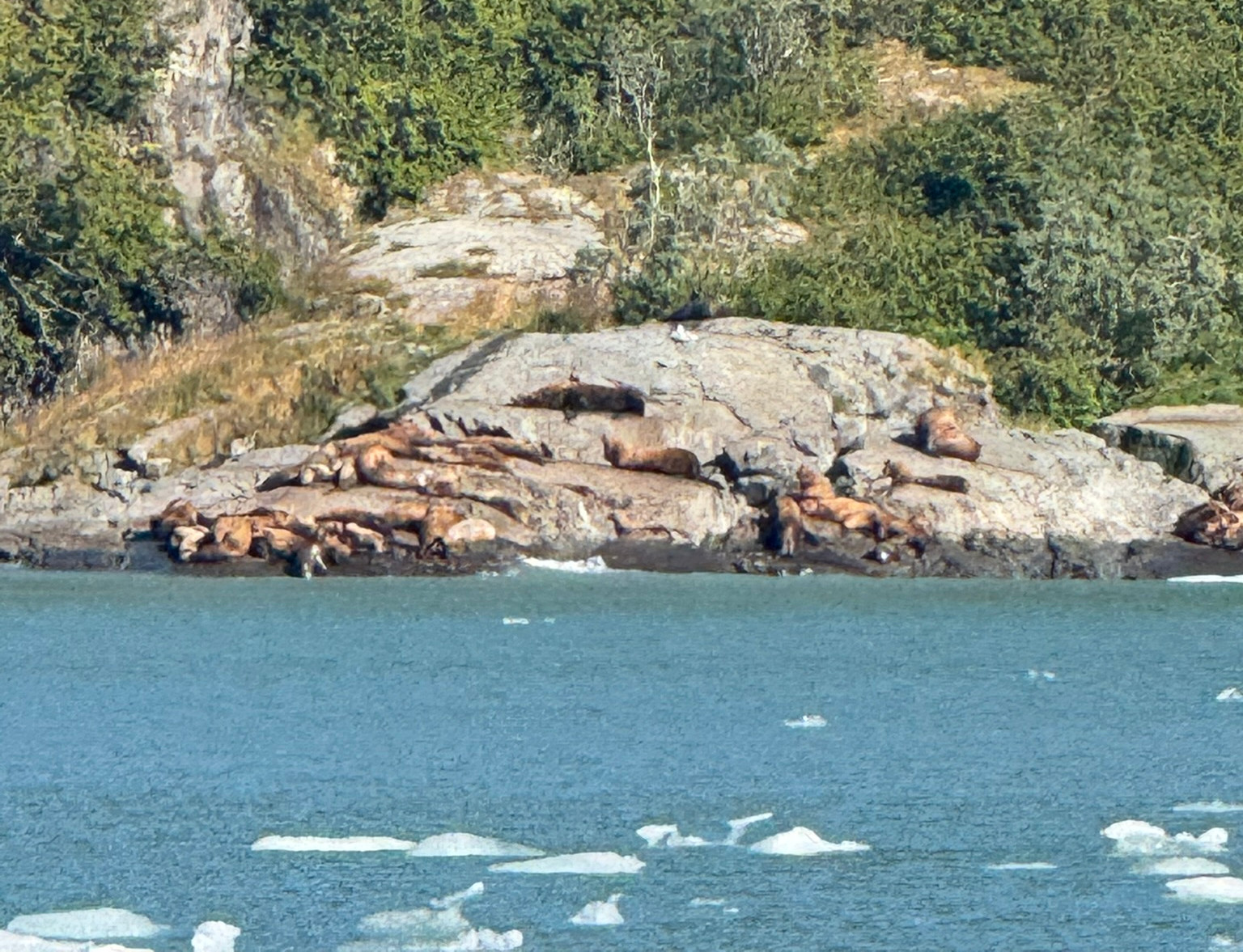
Whales.
Bald eagles.
Bears.
Moose.
Sea otters.
Seals.
Alaska provides incredible wildlife-viewing opportunities. For example, Juneau's surrounding waters are a major humpback whale viewing area, with peak viewing generally occurring during the summer cruise season.
But Alaska isn't a zoo. Wildlife goes where wildlife wants to go. You might spend hours looking for something and see nothing—and then glance out your cabin window at breakfast and spot a whale.
That's part of the fun.
JMart Traveler Tip: Pack binoculars. Seriously. They're one of the easiest things to forget and one of the things you'll be happiest to have.
What Is Alaska Weather REALLY Like?
Short answer? Whatever Alaska feels like doing that day.
Alaska is enormous, so there isn't one useful statewide forecast. Coastal Southeast Alaska and the Interior can have very different conditions on the same day.
The primary summer travel season runs roughly May through September. May tends to be relatively dry, while coastal summer temperatures often stay below about 65°F. Interior Alaska can be considerably warmer, with average July daytime temperatures reaching into the 70s in some areas. Conditions begin cooling again during August and September.
We've experienced sunshine, rain, cold, wind and unexpectedly gorgeous blue-sky days.
Sometimes on the same trip. The answer isn't trying to predict Alaska perfectly. It's packing correctly. Layers are your friend. So is rain protection. And glacier-viewing days can feel considerably colder when you're standing outside on a moving ship surrounded by ice.
Planning your wardrobe?
When Is the Best Time to Cruise Alaska?
The traditional Alaska cruise season runs primarily May through September, although some operators now stretch into the shoulder months. June through August remains the most popular period.
But there isn't one universally “best” month.
May
Longer daylight is returning, crowds may be lighter than peak summer and May is generally one of Alaska's drier months.
June
Very long days and the beginning of peak summer make June enormously popular.
July
Peak summer. Long daylight, generally warmer temperatures and lots of activity—but also peak-season demand.
August
Still prime Alaska season, with conditions beginning to transition later in the month. Interior landscapes can even begin showing hints of fall.
September
Cooler weather and shorter days return. Fall colors can be beautiful, but travelers should be prepared for more variable late-season conditions.
Rather than picking a month because someone online declared it “the best,” consider your priorities, schedule, budget and tolerance for weather.

Do You Need a Balcony Cabin in Alaska?
We get this question frequently. Our answer?
A balcony is wonderful in Alaska. It is not mandatory.
Alaska may be one of the destinations where you'll appreciate a balcony most. There is scenery seemingly everywhere, and being able to step outside your cabin with a cup of coffee and watch Alaska pass by is pretty special.
But here's the other side: If choosing an interior or oceanview cabin is what makes an Alaska vacation comfortably fit your budget, go to Alaska.
Ships have public decks and observation areas for a reason. The Norwegian Encore is essentially one gigantic indoor and outdoor Alaska viewing lounge. It was literally built for Alaska cruising. We'd rather help someone experience Alaska in an inside cabin than convince them they can't afford the trip because social media told them a balcony is mandatory.
Spend according to your priorities.
How Much Does an Alaska Vacation Really Cost?
Be careful comparing Alaska vacations based on the advertised cruise fare. The cruise itself may only be one component.
Your actual vacation budget might include:
Cruise fare + airfare + pre-cruise hotel + transfers + excursions + gratuities + travel protection + specialty experiences + land tour + rail transportation.
For a family, those shore excursions can become a meaningful part of the budget.
For someone adding Denali and several days in interior Alaska, the land portion can meaningfully change the total as well.
That's why we prefer comparing complete vacations, not advertisements.
A $999 cruise isn't necessarily less expensive than a $1,399 cruise once you compare what each option includes, where it goes and what additional arrangements you'll need.
What We've Learned From Experiencing Alaska Ourselves

This is probably the most important section of this entire guide. Because you can read brochures all day. But travel teaches you things brochures don't.
We've learned that itinerary matters enormously in Alaska. We've learned that glacier experiences aren't interchangeable. We've learned that some ports deserve an excursion while others can be wonderful simply to explore. We've learned that Alaska weather requires flexibility. We've learned that a sunny day and a clear view of Denali should never be taken for granted. We've learned that traveling Alaska by rail isn't merely transportation. We've learned that the coastline and the Interior can feel like completely different vacations. We've learned that sometimes it's worth spending money on the experience you'll remember for the rest of your life—and sometimes it's perfectly okay to walk off the ship and explore without spending another dime.
And perhaps most importantly:
We've learned that there isn't one right way to do Alaska.
That's precisely why planning matters.
So...What Kind of Alaska Traveler Are You?
Maybe you want the simplest possible vacation: fly to Seattle, board a beautiful ship, spend seven days surrounded by Alaska and fly home.
Fantastic.
Maybe Glacier Bay National Park has been on your bucket list for twenty years.
Let's find an itinerary that takes you there.
Maybe you want to stand before Hubbard Glacier.
Let's compare the options.
Maybe you want whales, wildlife and the White Pass Railway.
Let's look closely at your ports and time ashore.
Maybe you've dreamed of Denali and can't imagine going all the way to Alaska without seeing the Interior.
Then we should probably start there before choosing your cruise.
Maybe you're celebrating an anniversary and want a beautiful balcony cabin.
Maybe you're bringing the kids and grandparents and need a ship that works for several generations.
Maybe you're watching the budget and just want us to help you experience as much Alaska as possible for what you're comfortable spending.
Those shouldn't all be the same vacation.
Your Alaska Adventure Should Be Yours

Alaska is currently the most requested destination at JMart Travels. We understand why.
But our job isn't simply to get more people to Alaska.
Our job is to help you experience Alaska in the way that's right for you.
We've sailed these waters.
We've explored these ports.
We've stood before the glaciers.
We've searched for whales.
We've traveled into Alaska's interior.
We've ridden the rails.
We've experienced the weather.
And every time we return, we learn something new that makes us better prepared to help the next JMart traveler.
So if Alaska has been sitting on your bucket list, tell us what you've been dreaming about.
We'll help with the rest.
Ready to Start Planning Your Alaska Adventure?
Schedule your complimentary vacation planning appointment with JMart Travels.
JMart Travels
World-class journeys. Hometown care.


Comments